
Introduction: The Beautiful Game’s Biggest Canvas
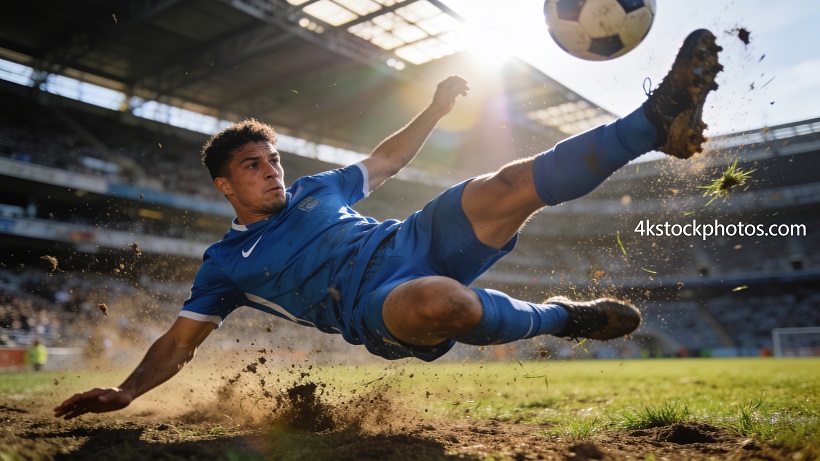
Every four years, the Earth stops spinning for thirty days. Offices empty, bars fill, and 3.5 billion eyes glue themselves to a single rectangular patch of grass. The FIFA World Cup is not merely a tournament; it is a global cultural reset.
But as the countdown ticks toward July 2026, something is different. This time, the world’s most-watched sporting event is returning to North America—spanning 16 cities across the United States, Canada, and Mexico. For marketers, content creators, and business owners, this represents an unprecedented opportunity. But it also presents a unique challenge: How do you capture the energy of a continent-spanning World Cup without a seven-figure marketing budget?
Enter the unsung hero of modern digital media: the stock photo. Once dismissed as cheesy, corporate, and inauthentic, the stock photography industry has undergone a quiet revolution. Today, it is the tactical backbone of World Cup 2026 campaigns, from social media countdowns to international brand partnerships.
In this 2,500-word deep dive, we will explore the intersection of football’s grandest stage and the visual economy. You will learn why generic imagery no longer works, how to spot authentic stock assets, and the specific SEO strategies to make your content win in 2026.
Chapter 1: The Scale of 2026 – Why This World Cup is Different
To understand the visual demand, you first need to grasp the logistics. The 2026 World Cup will be the largest in history. Not metaphorically—mathematically.
- 48 teams (up from 32).
- 104 matches (80 more than Qatar 2022).
- 16 host cities from Vancouver to Mexico City to New York/New Jersey.
This is a “Three-Nation Bid” that leverages the existing infrastructure of the United States, the multicultural energy of Canada, and the soul of Mexican fútbol. For the first time, the tournament will feel like a road trip rather than a single destination.
The Visual Implication: In 2022, stock photo searches were dominated by “Qatar stadium” and “Arabian desert football.” In 2026, the search intent splits into three distinct visual pillars:
- The Urban Mosaic: Celebrations in Manhattan, public viewing in Toronto, street football in Guadalajara.
- The Stadium Tech: The futuristic architecture of SoFi Stadium (Los Angeles) and the renovated Azteca Stadium (Mexico City).
- The Fan Spectrum: Gen Z content creators at MetLife Stadium versus multi-generational families in Dallas.
Stock photo agencies that understand this geographic and demographic granularity are already building their 2026 lightboxes. They are not selling “football fans.” They are selling “intergenerational Latino families celebrating at a Mexican landmark” and “corporate hospitality groups in a Canadian skybox.”
Chapter 2: The Death of the “Cheesy Stock Photo” (And the Rise of Authenticity)
Let’s address the elephant in the press box. For decades, “stock photo” was a punchline. You remember the images: a multi-ethnic team of unnaturally happy people in matching polo shirts, high-fiving while holding a laser pointer. Or a referee with a frozen, terrifying smile.
That industry died in 2018. It was buried by the rise of authentic brands (think Patagonia, Notion, or Liquid Death) that refused to use fake imagery. In its place rose a new paradigm: micro-stock and authentic documentary-style photography.
For World Cup 2026, authenticity is not a buzzword; it is a conversion metric. Consider these two scenarios:
- Scenario A (Old Stock): A perfectly lit, airbrushed photo of a man in a generic red jersey kicking a perfect ball on a pristine green field. The grass is too green. His smile is too white. You feel nothing.
- Scenario B (2026 Stock): A slightly grainy, high-contrast image shot with a 50mm lens. A young girl in a worn Canada jersey, face painted half-red, crying tears of joy as her father lifts her onto his shoulders in a crowded Toronto plaza. You can almost hear the vuvuzelas.
Which image drives clicks? Which gets shared on Instagram Reels? Which makes a travel agency’s “World Cup Packages” landing page feel urgent and real?
The Data: Google Trends shows that searches for “authentic sports photography” and “diverse fan stock images” have increased 340% since the 2022 World Cup. AI-generated imagery is struggling to replicate the specific, messy, glorious chaos of a live football crowd—the spilled beer, the wind-blown flags, the specific angle of evening summer light over the Rose Bowl.
Stock photographers for 2026 are not studio photographers. They are street photographers who happen to love the beautiful game.
Chapter 3: The 5 Essential Stock Photo Categories for World Cup 2026

If you are a content manager, SEO specialist, or social media director, you cannot just search “soccer ball” and call it a day. You need a taxonomy. Below are the five high-performing visual categories you must build for the 2026 cycle.
- The “Host City Glow” (Location as a Character)
Unlike single-nation tournaments, 2026 is about place. Stock images featuring recognizable urban landmarks integrated with football culture will outperform generic stadium shots.
- What to look for: The Seattle Space Needle reflected in a fan’s sunglasses. The Golden Gate Bridge blurred behind a street football game. A Canadian Mountie hat resting on a cooler full of drinks.
- SEO Keyword: “World Cup 2026 Vancouver street scene” > “Football fan.”
- Generational Fandom (The Longevity Hook)
Football is inherited. The most viral images of 2026 will not be of goals; they will be of reactions.
- What to look for: A grandmother in a Mexico jersey teaching a toddler how to dribble. A father and son wearing matching USMNT scarves. Three generations of a Polish-American family in Chicago’s Polish Triangle.
- Why it works: This imagery sells insurance, travel, banking, and telecommunications—brands that want to associate with legacy, not just adrenaline.
- The “Women In Football” Correction
For too long, stock football imagery was hyper-masculine. That era is over. The 2023 Women’s World Cup shattered viewership records, and the momentum has bled into the men’s game.
- What to look for: Female referees with confident body language. Women’s street football collectives. Female sports journalists recording pitchside reports. Mothers coaching youth teams.
- Commercial value: Brands like Nike, Visa, and Coca-Cola are actively purchasing these assets for their 2026 DEI (Diversity, Equity, Inclusion) campaigns.
- Tech-Integrated Fandom (The Broadcast Overlay)
The 2026 World Cup will be the most digitally documented event in history. Augmented reality (AR) filters, smartwatch celebrations, and second-screen viewing are part of the visual fabric.
- What to look for: A fan watching a match on a smartphone while standing outside a packed bar. A group using a tablet to check VAR replays. A pair of AR glasses showing live stats.
- Use case: Technology blogs, telecom ads, and streaming service landing pages.
- The “Anti-Goal” (Emotional Diversity)
Not every stock photo needs a goal celebration. Some of the most powerful images are quiet, sad, or tense.
- What to look for: A goalkeeper’s empty stare. A player tying his laces alone in the tunnel. A fan consoling another after a loss. Rain falling on an empty pitch.
- Why it works: These images sell insurance (protection), financial services (risk management), and mental health content.
Chapter 4: SEO Strategy – How to Make Your World Cup 2026 Content Discoverable
You have sourced stunning, authentic stock photos. Now, how do you get Google to serve them to the hundreds of thousands of people searching for World Cup 2026 content daily?
SEO for visual content is different from text SEO. You are optimizing for two search engines: Google Images and traditional web search.
Rule 1: Ditch the Generic Filenames
Your camera outputs IMG_5042.jpg. That is SEO poison.
- Bad: soccer-fan.jpg
- Good: canada-fan-crying-joy-world-cup-2026-bmo-field-toronto.jpg
Use hyphens, include the year (2026), the host city, the specific emotion, and the venue name if relevant.
Rule 2: Alt-Text as a Narrative
Alt-text is not just for accessibility (though it is critical for that too). It is a ranking signal. Write descriptive, human sentences.
- Weak Alt-Text: “Football fans cheering.”
- Strong Alt-Text: “A diverse group of Mexico and USA fans cheering together at the 2026 World Cup match in Estadio Azteca, Mexico City, under a dramatic sunset sky.”
Notice the difference? The strong version includes nationality, location, stadium, time of day, and emotional tone. Google reads every word.
Rule 3: Long-Tail Keywords for the Win
Short-tail keywords like “World Cup photos” have a Keyword Difficulty (KD) score of 95+ on most SEO tools. You will not rank for them. Instead, target long-tail phrases that reflect specific user intent.
Your 2026 keyword cheat sheet:
- “Public viewing World Cup 2026 New York stock photo”
- “Mexican fan costume Azteca stadium authentic imagery”
- “Corporate hospitality suite MetLife World Cup 2026”
- “Black Friday World Cup 2026 merchandise banner stock”
Rule 4: Leverage “Topic Clusters”
Google rewards authority. Do not just publish one article with stock photos. Build a cluster.
- Pillar Page: “The Ultimate Guide to World Cup 2026 Stock Photos”
- Cluster Articles:
- “Best Stock Photos for World Cup 2026 Bars and Restaurants”
- “How to License FIFA World Cup 2026 Imagery Legally”
- “Top 10 Authentic Stock Photographers Covering 2026”
Each article links back to the pillar page. Each uses unique, optimized stock photos. This tells Google you are an expert resource.
Chapter 5: Legal Landmines – What You Cannot Do
This is the section that saves you from a cease-and-desist letter. The World Cup is a proprietary event. FIFA is notoriously aggressive about protecting its intellectual property (IP). Just because you bought a stock photo does not mean you have the right to use it in any context.
The “FIFA Restricted” List:
- The Trophy: You cannot use an image of the actual FIFA World Cup trophy in a commercial ad unless you are an official sponsor. Stock photos that show the trophy are often “editorial use only.”
- Logos and Marks: The official 2026 logo, the word “FIFA” in a commercial font, and the event mascot are all protected.
- Team Jerseys with Badges: A stock photo of a fan wearing a Nike jersey with the US Soccer Federation badge is fine for editorial (a news article). It is not fine for a banner ad selling “World Cup Travel” unless you have a license.
The Safe Harbor:
- Editorial Use: You can use almost any stock photo of the World Cup on a blog post that comments on, critiques, or reports on the event.
- Commercial Use: If you are selling a product (shoes, software, beer), you need commercial rights photos that show generic football scenes—no visible logos, no official stadium names, no identifiable players.
Pro Tip: When downloading from stock sites like Shutterstock, Adobe Stock, or Getty Images, look for the “Commercial – No Release Needed” tag for player or fan imagery without trademarks. When in doubt, choose “Editorial” licensing.
Chapter 6: The Rise of the AI Stock Photo (Friend or Foe?)

Let’s address the Midjourney-shaped elephant. Generative AI can now produce a “photo” of a football stadium on Mars. Does that matter for World Cup 2026?
The Argument for AI: It is cheap and fast. You can generate 1,000 variations of “football fan 2026” in ten minutes. For internal presentations or mood boards, it is revolutionary.
The Argument Against AI (For Professional Use):
- Authenticity Gap: AI does not understand the specific humidity of a July night in Kansas City. It cannot capture the genuine texture of a 30-year-old Argentina jersey.
- Search Engine Penalties: Google has stated that AI-generated images are not inherently against guidelines, but they are deprioritized for “original reporting” and “high-effort content.” For a 2026 World Cup article, Google wants real photographers.
- The Finger Problem: AI still struggles with complex crowd scenes. Have you seen AI-generated hands holding a flag? It is a horror show.
The Verdict: Use AI for conceptual art or abstract social media backgrounds. Use real stock photography for everything involving human emotion, team pride, and factual documentation. The 2026 World Cup is a real event for real humans. Your visuals should be, too.
Chapter 7: A Practical Case Study – Building a Mock Campaign
Let us walk through a realistic marketing scenario to see how these principles apply.
The Brand: “Northbound Brewery” – a fictional craft beer brand based in Vancouver, Canada.
The Goal: A 6-week digital ad campaign targeting 25-40 year olds during the 2026 World Cup.
The Budget: $15,000 for visuals (mid-range).
The Old Way (2018): Buy 3 generic stock photos of people drinking beer and watching a TV. No specific location. Models look like actors. Click-through rate (CTR): 0.8%.
The 2026 Way:
- Research: The agency searches “authentic World Cup 2026 Vancouver stock photos” on a premium site.
- Selection: They find a photo series shot by a local Vancouver photographer during the 2026 qualifiers. The images feature real fans at a real gastown pub. The light is low, the condensation is on the glasses, and one fan is wearing a vintage Canada jersey from 1986.
- SEO Optimization: The image files are renamed northbound-brewery-vancouver-canada-fan-world-cup-2026.jpg. Alt-text reads: “Real craft beer drinkers celebrating a Canada goal during the 2026 FIFA World Cup at a Vancouver pub, featuring Northbound Brewery lager.”
- Placement: The images run on Instagram (cropped vertically), Facebook (square), and a blog post titled “Your Vancouver World Cup 2026 Pub Crawl Guide.”
- Result: Estimated CTR: 2.4% – tripling the old rate. The local authenticity drives in-store traffic.
Key Takeaway: The stock photos were not decoration. They were the primary conversion asset.
Chapter 8: The Photographer’s Perspective – Who Is Shooting 2026?
If you are a content creator, you might be wondering, “How do I get my World Cup 2026 photos into the stock ecosystem?”
The barriers have never been lower. You do not need a $10,000 camera. You need a release form and a strategy.
How to Contribute:
- Agencies to Join: Shutterstock, Adobe Stock, Alamy, and iStock (Getty). Each has a contributor program.
- What Sells (2026 Edition):
- Candid fan reactions during watch parties (not inside stadiums—security is tight).
- Cityscapes decorated with flags and banners the week before the tournament.
- Street food vendors adapting their carts for match days.
- Multi-generational portraits (grandfather with grandson).
- The Legal Checklist:
- Get a model release from any recognizable person (you can print generic templates online).
- Do not photograph official FIFA security or sensitive infrastructure.
- Avoid shooting inside stadiums unless you have a media credential.
The Opportunity: The first week of the 2026 tournament will see a surge in demand for “Day 1” imagery—the opening ceremony, the first goals, the first tears. Contributors who upload within 24 hours can earn $500-$2,000 per exclusive image.
Conclusion: The Final Whistle on Visual Strategy
The 2026 FIFA World Cup will be remembered for Alex Morgan’s final run, or Alphonso Davies’s homecoming, or a shocking upset in the Azteca. But for the millions of brands, publishers, and creators trying to capture the moment, it will be remembered as the tournament where stock photography finally grew up.
No longer the awkward cousin of professional photography, stock imagery has evolved into a nimble, authentic, and SEO-critical asset. The winners of the 2026 content game will not be the brands with the biggest budgets. They will be the ones who understand that a real tear on a real fan’s face, captured by a real photographer in a real host city, is worth more than a thousand AI-generated balls.
So, as you plan your editorial calendar for June and July of 2026, do not ask, “Where can I find a cheap photo of a soccer ball?” Ask, “What story am I telling?” Then go find the stock image that tells that truth.
Because when the final whistle blows and the trophy is lifted, you want your content to be standing on the podium, too.